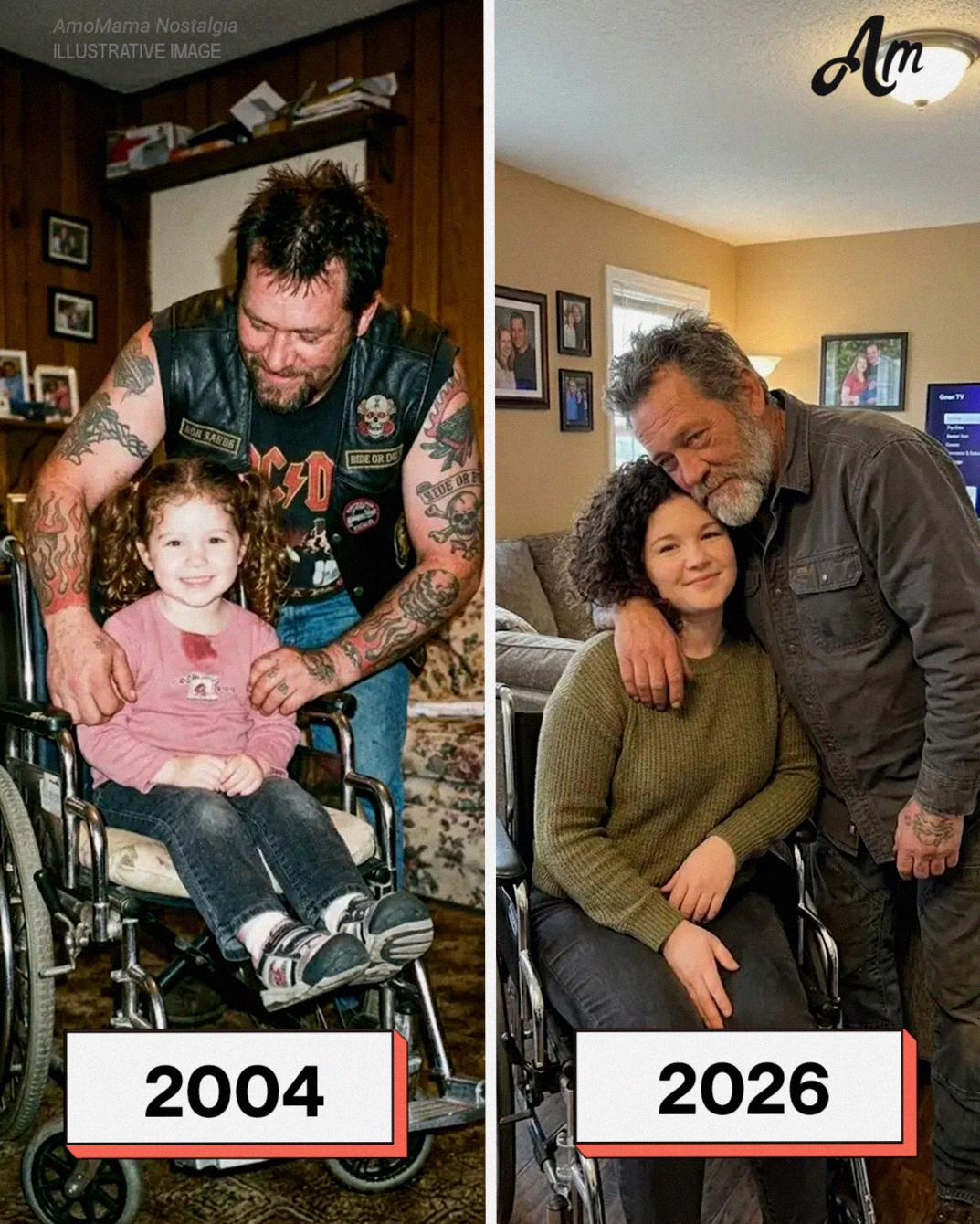
The Letter My Uncle Left Behind
I don’t remember my parents’ voices.
That’s the first thing people don’t understand when they hear my story.
They imagine loss as something loud and unforgettable—something you replay over and over. But I was only four years old when the accident happened.
What I remember instead is silence.
And pain.
And waking up in a hospital bed where nothing felt familiar—not the room, not the people, not even my own body.
I couldn’t move my legs.
At that age, I didn’t fully understand what that meant. I just knew something was wrong, and no one could explain it in a way that made sense.
My parents were gone.
And just like that, my life had changed before I even had time to understand it.
While social workers discussed my future—using words like placement, facility, and adjustment—there was one person who didn’t hesitate.
My uncle Ray.
He wasn’t married. He didn’t have children. He had never raised a kid before—especially not one who suddenly needed full-time care.
But he stepped forward anyway.
“I’ll take her,” he said.
No hesitation. No long discussion. Just a decision.
At first, everything was difficult.
I cried a lot. I didn’t understand where my parents were. I didn’t understand why I couldn’t run or play like before.
And Ray… he didn’t always have the perfect answers.
But he never left.
He learned everything from scratch.
How to lift me safely.
How to help me get dressed.
How to move through a world that wasn’t built for me.
He built ramps with his own hands.
They weren’t perfect—I remember one leaning slightly to the side—but they worked.
And more importantly, they meant something.
They meant I wasn’t stuck.
Ray never treated me like I was broken.
He treated me like I was still becoming something.
When I struggled, he didn’t pity me.
He encouraged me.
“Try again,” he would say gently. “You’re stronger than you think.”
And when I got frustrated—and I did, often—he never made me feel like a burden.
Not once.
We didn’t have much money.
Ray worked long hours, sometimes more than one job, just to keep things steady.
But somehow, he made our small home feel full.
My room became my world.
Books lined the shelves. Plants sat by the window. He found tools and small adjustments that helped me do things on my own.
Opening drawers. Reaching shelves. Moving without asking for help.
Every small step felt like freedom.
And Ray celebrated every one of them.
As I grew older, I started noticing the things he didn’t say.
The tiredness in his eyes. The quiet moments when he thought I wasn’t looking.
To continue reading, click ‘Next’ to go to the next page.
ADVERTISEMENT
